
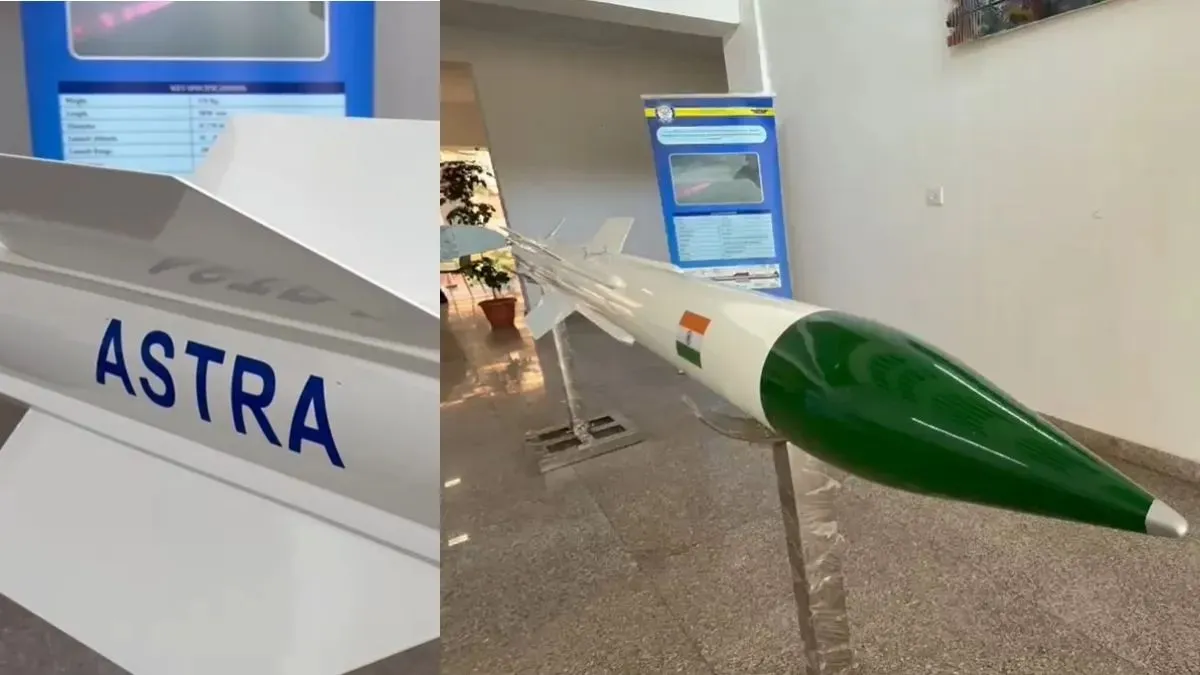
The Defence Research and Development Organisation (DRDO) is currently working continuously on the Astra missile. Astra-1 has a range of approximately 100 kilometers, and preparations are underway to further increase its range to 160 kilometers. As per the latest update, DRDO is now working to increase the missile's range to 300 kilometers.
DRDO has increased trials of the Astra-2 missile, also known as Astra Mark-2. This missile is being tested by installing it on fighter aircraft. The Astra Mark-2 missile has a range of over 200 kilometers. DRDO's third, most important project, which will be a game-changer, is Project Gandiva. This project is also known as the Astra Mark-3 missile. Its range will be over 300 kilometers. Work is ongoing on all these missiles.
Astra is a Beyond Visual Range (BVR) missile. This means it can be fired from great distances without having to come within range. The Astra Mark-1 is already in service with the Indian Air Force. It is an air-to-air missile. It has a very high lethal capability for engaging aerial targets.
The Indian Air Force has also successfully tested the Astra missile from the Sukhoi-30 MKI and the indigenous Tejas fighter aircraft. The Astra missile is capable of air-to-air strikes and has the capability to hit targets with precision even beyond visual range. The Astra missile is equipped with a state-of-the-art navigation system. The Indian Air Force successfully tested this missile with an indigenous 'radio frequency seeker'. It should be noted that the Astra missile is one of the most lethal BVR missiles in the world and has added India to the list of select countries that manufacture such missiles.
Rajnath Singh approves DRDO missile technology transfer to Indian companies
Defence Minister Rajnath Singh has approved the transfer of DRDO-developed technologies for all conventional missile systems to Indian industries for production within the country. The Transfer of Technology (ToT) is aimed at giving Indian companies a larger role in the defence ecosystem. Industries that meet the applicable qualifications, certifications and regulatory requirements will be able to take up indigenous production of these missile systems.
The move is intended to help take missile systems developed by DRDO from the development stage into industrial production. It is also part of the broader push towards Aatmanirbharta in defence, with greater use of Indian industry for the development and manufacture of advanced defence systems.
Also Read:
