
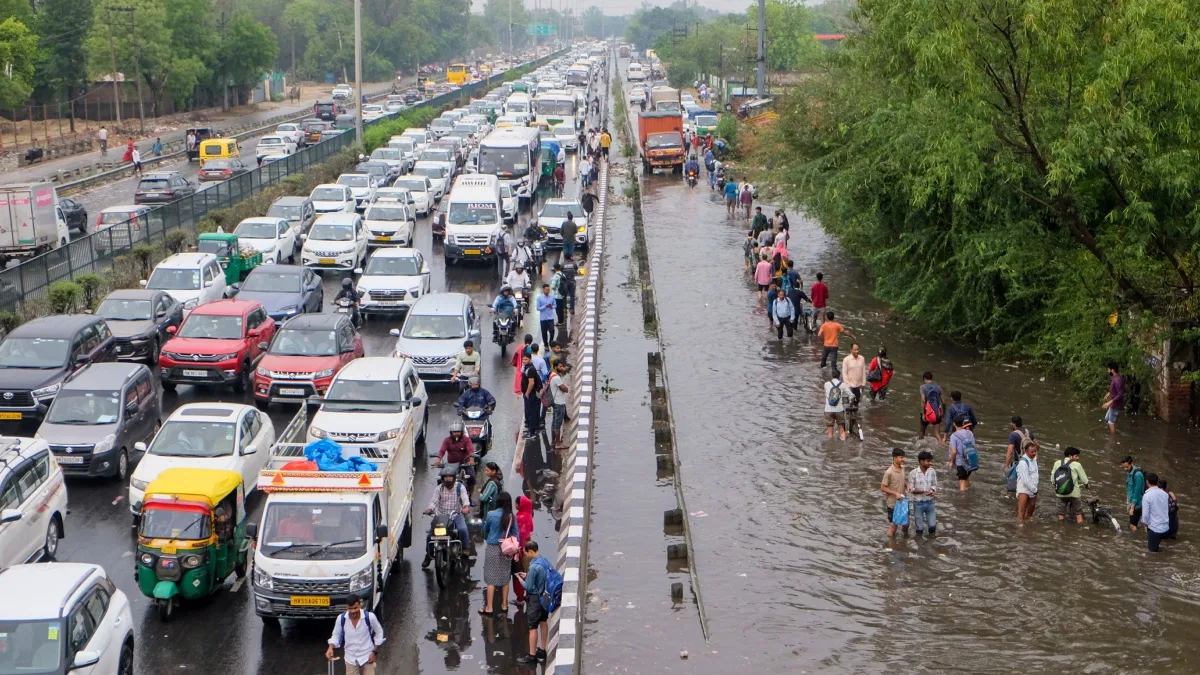
Chief Justice of India BR Gavai made a strong remark on the fragile state of urban infrastructure in the national capital, saying that just two hours of rainfall is enough to bring the entire city to a standstill. His comment was made during a Supreme Court hearing on Monday regarding the poor condition of National Highway 544 in Kerala.
The bench, comprising CJI Gavai, Justice K Vinod Chandran, and Justice NV Anjaria, was hearing a petition filed by the National Highways Authority of India (NHAI), challenging a Kerala High Court order. The High Court had earlier suspended toll collection at a toll plaza in Thrissur district, citing the highway’s deplorable condition.
During the hearing, the bench questioned how toll collection could be justified when commuters are forced to spend up to 12 hours crossing a single stretch of road. “If it takes a person 12 hours to travel from one end of the highway to the other, why should they pay toll?” the Chief Justice asked.
While discussing traffic congestion issues, a lawyer also raised the matter of frequent jams outside the Supreme Court itself. Responding to that, CJI Gavai drew a parallel with Delhi’s situation during monsoons, noting, “You know what happens in Delhi — if it rains for two hours, the entire city becomes paralysed.”
The Court expressed dissatisfaction with the NHAI's performance in maintaining road conditions and emphasised the hardships faced by ordinary citizens who are stuck in long traffic jams, often due to incomplete or damaged roads.
On August 14, the bench had already shown reluctance to entertain NHAI’s appeal, pointing out the unfairness of collecting tolls when the road conditions fail to meet basic standards. The justices highlighted the disproportionate inconvenience caused to commuters and questioned how such toll charges could be justified under the circumstances. After hearing detailed arguments, the Supreme Court reserved its judgment on the matter.
Recently, Delhi experienced heavy rainfall that led to widespread waterlogging, traffic chaos, and severe disruptions to daily life. Major intersections were submerged, metro services faced delays, and commuters were stranded for hours across the city. Emergency services struggled to respond to calls, and schools in some areas were forced to close temporarily, once again highlighting the capital’s vulnerability to even moderate monsoon showers.
This case sheds light on growing public and judicial frustration over inadequate infrastructure and a lack of accountability from highway authorities. It also underlines the urgent need for better urban planning, especially in cities like Delhi that remain vulnerable to seasonal disruptions.
