
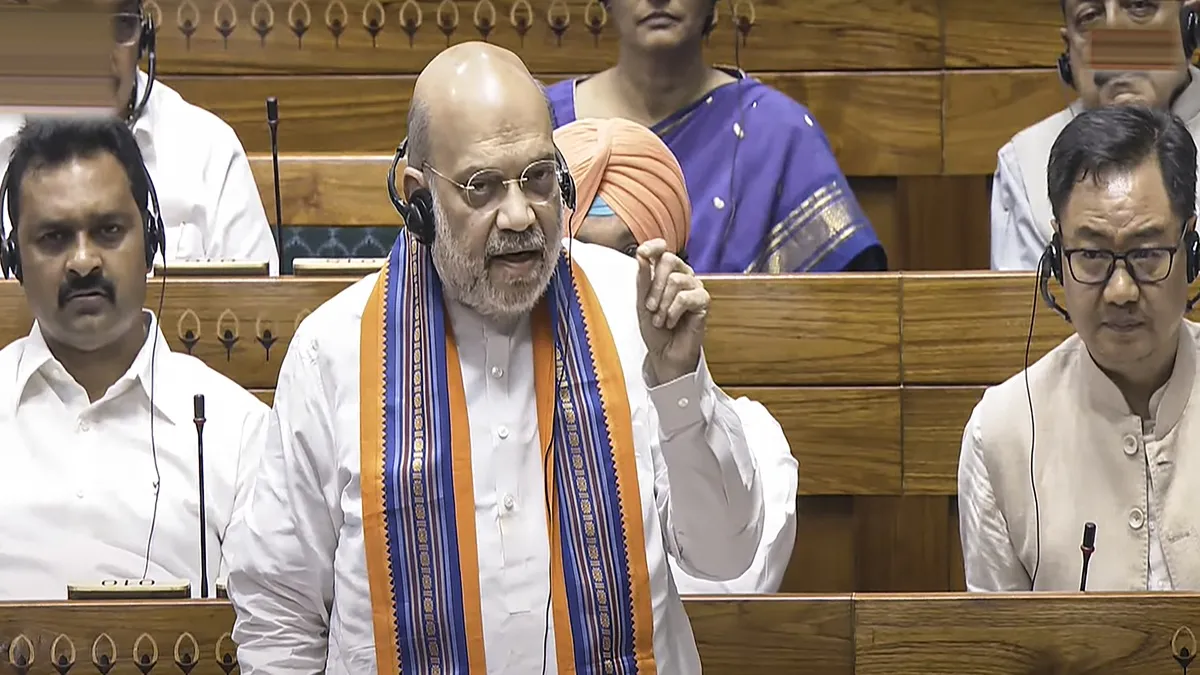
In a landmark development in Parliament, Union Home Minister Amit Shah tabled three significant bills in the Lok Sabha on Wednesday (August 20), one of which seeks to bring sweeping changes to the tenure and accountability of the Prime Minister, Chief Ministers, and Ministers. These bills were later referred to a Joint Parliamentary Committee (JPC) for further examination.
The Constitution Amendment Bill, 2025
The centrepiece of Shah’s legislative push was the Constitution (One Hundred and Thirtieth Amendment) Bill, 2025, which introduces a clear mechanism for the removal of top executives from office if they face allegations of grave criminal offences.
Under the proposed amendment, if the Prime Minister, a Chief Minister, or any Minister is arrested and detained for a continuous period of 30 days or more on charges punishable with imprisonment of five years or above, they will automatically lose their office.
Jammu and Kashmir-specific provisions
Among the three bills was also the Jammu and Kashmir Reorganisation (Amendment) Bill, 2025, which plugs a key gap in the 2019 Act. Currently, there is no provision to remove a Chief Minister or Minister in J&K in case they are detained on serious charges.
The amendment introduces Section 5A, which mandates-
- Any Minister in custody for 30 consecutive days on serious charges will be removed from office by the Lieutenant Governor on the Chief Minister’s advice.
- If the Chief Minister fails to advise removal, the Minister will automatically cease to hold office from the following day.
- Similarly, if the Chief Minister himself is detained for 30 days, he must resign by the 31st day. Failure to resign will result in automatic cessation of office.
Balance between accountability and opportunity
Interestingly, the bill also ensures that being removed under these provisions will not permanently bar an individual from office. Once released from custody, they may be reappointed as Chief Minister or Minister, as per the existing appointment norms.
Political and constitutional significance
The Government emphasised that allowing individuals accused of serious criminal offences to continue in such high constitutional positions could jeopardize constitutional morality, good governance, and public trust. Through these amendments, the Union seeks to strike a balance — upholding accountability without permanently foreclosing political opportunities.