
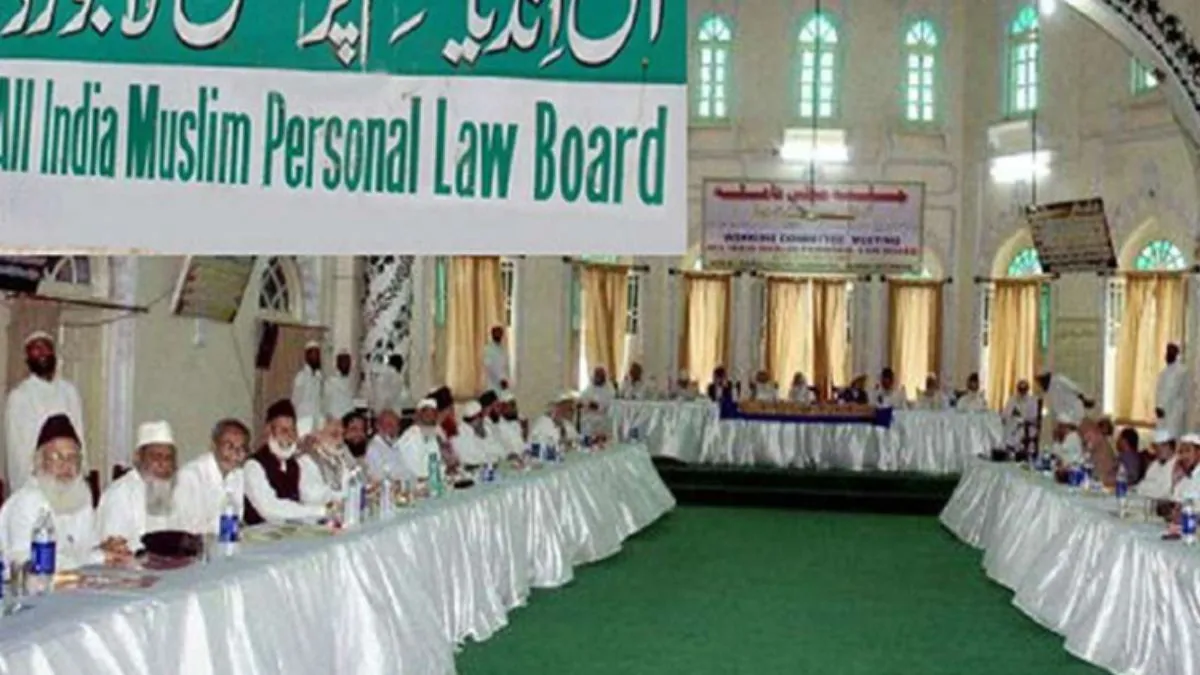
The All India Muslim Personal Law Board (AIMPLB) has announced nationwide protests against the Waqf Amendment Bill, expressing dissatisfaction with the recent Supreme Court verdict on the matter. In an appeal issued to the community, the Board called on Muslims across the country to participate in demonstrations.
This came after the apex court on Monday refused to stay Waqf law. However, some provisions of the contentious act were stayed.
Sit-in protest, symbolic arrests at Jantar Mantar
As part of the campaign, a sit-in protest and symbolic arrests will be held at Delhi’s Jantar Mantar on September 24.
The Board further urged Muslims to observe a shutdown of their offices and shops on September 26 from 8 am to 2 pm. It has also asked supporters to display banners reading “Waqf Amendment Law is not acceptable to us.”
Mega rally planned at Ramlila Maidan
A major rally has been planned at Ramlila Maidan in Delhi on October 16, where the Board expects a turnout of lakhs of participants. Besides, large marches will be organised in Delhi and other cities, including a march up to Rashtrapati Bhavan.
At the state level, protesters will surround Governor houses as part of the agitation.
SC order on Waqf law
Over 100 petitioners were filed in the Supreme Court, seeking a stay on the Waqf law. The bench of CJI BR Gavai and Justice AG Masih refused to stay Waqf law but put on hold its key parts, calling them “prima facie arbitrary.
The provisions which were stayed by the top court include
Five-year practice rule: The law required that a person must have followed Islam for at least five years before being allowed to create a waqf. The court suspended this rule, noting that without clear guidelines from state governments, it could lead to arbitrary decisions.
Non-Muslim representation cap: The court limited the participation of non-Muslims in waqf bodies. It said the Central Waqf Council cannot have more than four non-Muslim members, with similar restrictions for State Waqf Boards. However, it allowed non-Muslims to serve as CEOs of State Waqf Boards but added that, “as far as possible,” the role should be given to a Muslim.
Encroachment disputes clause: The court stopped the government from derecognising waqf land while an encroachment case is pending before a government officer. It ruled that such powers undermine the separation of powers. Until a tribunal or court decides ownership, waqf land will remain protected and no third-party rights can be created over it.