
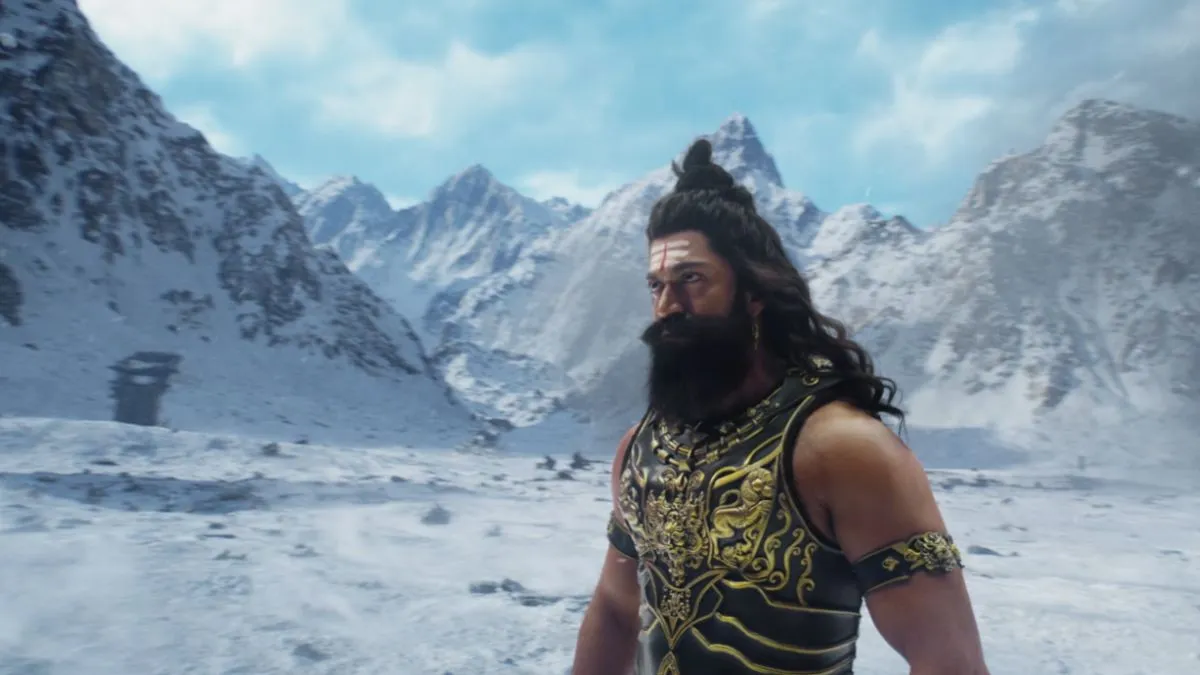
The second trailer of Ramayana, released on Thursday, October 15, puts Ravana's extraordinary power in the spotlight. One line in the trailer says, "A boon from Lord Brahma bestowed such unimaginable power upon a demon that his wrath brought mankind to the brink of destruction." It raises a question at the heart of the epic: how did Ravana become so powerful, and what allowed Rama to defeat him?
Valmiki Ramayana describes how Ravana performed severe penance to please Lord Brahma and received boons that made him exceptionally difficult to defeat. These included protection from several powerful classes of beings, the restoration of his sacrificed heads and the ability to assume different forms. But there was a crucial gap in the protection he sought, one that would eventually prove decisive.
What boons did Lord Brahma grant Ravana?
1. Protection from death at the hands of powerful beings
According to the Uttara Kanda of Valmiki Ramayana, Ravana asks Brahma to make him invulnerable to the gods, Yakshas, Gandharvas, Nagas, Suparnas, Daityas, Danavas and Rakshasas. Brahma grants his request, but the protection does not extend to humans.
Ravana had initially asked for immortality, arguing that death was the greatest fear of all living beings. Brahma tells him that complete immortality is not possible and asks him to choose another boon. Ravana then lists the beings from whom he wants protection, leaving humans out because he considers them too insignificant to pose a threat.
2. Restoration of his sacrificed heads
Ravana's boons follow years of severe penance. Valmiki Ramayana describes how he offers his own heads into the sacrificial fire as part of his austerities. When he is about to sacrifice his final head, Brahma appears before him.
After granting Ravana protection from the specified beings, Brahma restores the heads he had sacrificed. The episode shows the extreme lengths Ravana went to in order to win divine favour.
3. The ability to assume any form
Brahma also grants Ravana the ability to assume whatever form he wishes. This becomes significant in the Aranya Kanda, during the events leading to Sita's abduction.
Ravana approaches Sita disguised as a wandering ascetic, allowing him to get close to her before revealing his intentions and abducting her. His disguise plays a key role in the episode, showing how he uses his ability to change form to deceive others.
The loophole in Ravana's boon
Ravana's protection from death came with a major limitation: he had not asked Brahma to protect him from humans. He considered them too weak and insignificant to pose any real danger, focusing instead on the gods and other powerful beings he feared.
That omission becomes central to the story. In the Bala Kanda, the gods seek Vishnu's help because Ravana has become a threat they cannot overcome. They ask Vishnu to take human form and defeat him. Vishnu agrees to be born as Rama, making it possible for Ravana to be defeated by someone outside the list of beings covered by his boon.
The protection that Ravana believed made him almost invincible therefore contained the very weakness that would bring about his downfall.
How Ravana became a threat to the world
Valmiki Ramayana portrays Ravana as a powerful ruler whose actions threaten gods, sages and the wider order of the worlds. His growing arrogance and willingness to use his strength against others make him more than a formidable king.
- He terrorised gods and sages: The epic describes Ravana as a tormentor of sages and other beings, disrupting their religious practices and austerities.
- He expanded his power: In the Uttara Kanda, Ravana defeats his half-brother Kubera and takes possession of the Pushpaka chariot, adding to his power and prestige.
- He abducted Sita: Disguised as an ascetic, Ravana approaches Rama's wife and carries her away. Jatayu attempts to stop him but is overpowered.
- He refused to return Sita: Ravana's decision to keep Sita in Lanka leads to the conflict with Rama's forces. The war ends with Rama killing Ravana.
These events help explain the trailer's description of Ravana bringing the world to the brink of destruction. The epic depicts a wider crisis involving gods, sages and other beings rather than a single event in which all humanity is literally on the verge of extinction. Ravana's power and his refusal to respect others ultimately lead to his defeat.
What to know about the new Ramayana film
The upcoming Ramayana is directed by Nitesh Tiwari and produced by Namit Malhotra's Prime Focus Studios, in association with DNEG and Monster Mind Creations. The film stars Ranbir Kapoor as Rama, Sai Pallavi as Sita and Yash as Ravana. Other cast members include Ravi Dubey as Lakshmana, Sunny Deol as Hanuman and Kunal Kapoor as Indra. The film's music is composed by Hans Zimmer and A. R. Rahman.
The project is planned as a two-part cinematic adaptation. The first part is scheduled for a worldwide theatrical release on November 5, 2026, with the second part planned for Diwali 2027. The reported combined budget for the two films is around Rs 4,000 crore.
With Ravana's power taking centre stage in the new trailer, Valmiki Ramayana offers important context for understanding his character. Brahma's boons made him exceptionally difficult to defeat, but they did not make him immortal. By dismissing humans as insignificant, Ravana overlooked the very possibility that would ultimately lead to his downfall at the hands of Rama.
ALSO CHECK OUT:
Kunal Kapoor's Indra Dev to Jatayu's fight with Ravana, 6 new glimpses in Ramayana English trailer
