
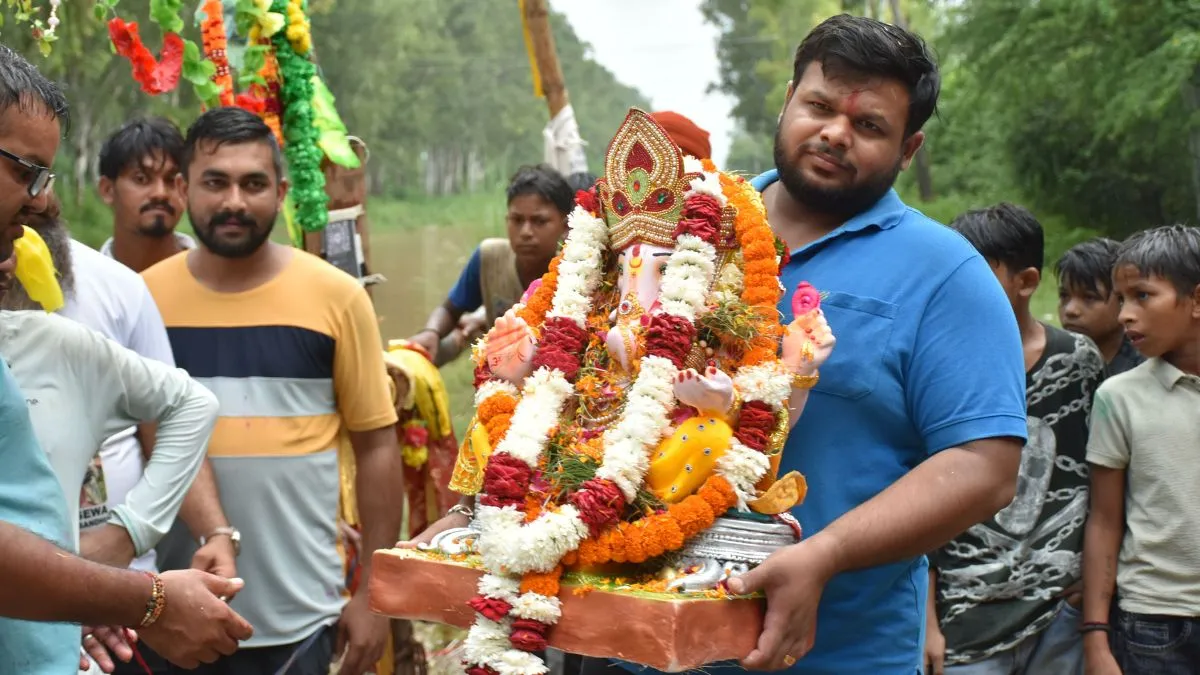
Ganesh Chaturthi is not just a celebration of Lord Ganesha's arrival, but also a festival that ends with his departure. After days of prayers, aarti, and celebration, devotees take their idol of Lord Ganesha for visarjan. It marks the end of the festival celebrations. In 2026, Ganesh Chaturthi will fall on September 14, while Ganesh Visarjan will be held on September 25, Anant Chaturdashi. Ganesh Chaturthi starts on Bhadrapada Shukla Chaturthi, whereas visarjan of the idol takes place on Bhadrapada Shukla Chaturdashi.
However, there is one question that arises in one’s mind. Why do the devotees immerse their idol of Lord Ganesha when they have been worshipping Bappa for so many days? Why is visarjan so significant, and what makes visarjan such an important part of Ganeshotsav?
Why is the Ganesh idol immersed?
Visarjan of Ganesh also involves the practice of sending off Lord Ganesha from the place he spent time with his devotees during the festival. Devotees perform a processional immersion of the idol, singing “Ganpati Bappa Morya” (Hail Lord Ganesha). It is also seen as a symbol of the transient aspect of the physical body. Devotees worship the idol with reverence during the festival and later send the idol back to the natural elements in the process of visarjan. However, for devotees, it is not the case that the presence or blessings of Lord Ganesha come to an end with the visarjan. On the contrary, the visarjan marks the end of the festival along with faith in Bappa.
According to mythological beliefs, Maharishi Ved Vyas began narrating the story of the Mahabharata to Lord Ganesha, and Ganesha continued writing it for 10 days. After ten days, when the Mahabharata story was completed and Ved Vyas opened his eyes, he saw that Ganesha's body temperature had increased due to continuous writing. On the 10th day, after the completion of the story, Ved Vyas made Ganesha take a bath in the lake to cool him down, after which his body temperature returned to normal. It is said that the day Ved Vyas bathed Ganesha was Anant Chaturdashi. Since then, the tradition of immersing Ganesha after 10 days of worship has been going on.
There is a religious belief that when the idol of Lord Ganesha is immersed, he takes with him all the obstacles, troubles, and negative energy of his devotees. Water is considered one of the five elements, in which the idol of Lord Ganesha, installed with Pran Pratishtha, dissolves and merges with the five elements, reuniting with its original form. This tradition suggests that whoever is born is sure to have an end and a new beginning.
When did the tradition of public Ganeshotsav begin?
Ganesh Chaturthi has religious traditions going back a lot further, but its conversion to a major public event has special connections to Maharashtra. This tradition of celebrating the festival in public received a new impetus in the late 19th century when Lokmanya Bal Gangadhar Tilak converted Ganeshotsav into a public festival, which provided people a chance to come together and have a sense of social unity through cultural activities. Gradually, these festivities transcended homes and temples to include large pandals, public prayers, cultural events, and even processions.
How did Ganesh Visarjan become part of the celebrations?
Devotees install Lord Ganesha's idol at home or in public pandals on Ganesh Chaturthi. Depending on family or community tradition, the idol may be kept for different durations before being immersed. Some devotees perform visarjan after one and a half days, while others keep the idol for three, five, seven or ten days. The major public immersion takes place on Anant Chaturdashi. In 2026, Anant Chaturdashi and the main Ganesh Visarjan fall on September 25.
Before the immersion, devotees perform the final puja and aarti and bid farewell to Bappa. The idol is then carried to the immersion site amid devotional chants and celebrations.
The meaning behind 'Ganpati Bappa Morya'
As the devotees take out the idol for visarjan, there are also often chants of "Ganpati Bappa Morya." This is an emotional moment for most devotees since the idol has been staying with them for a few days now. Along with the process of taking the idol for visarjan, there is also a prayer that this Bappa comes back next year. So, there is not only the celebration but also the sense of departure and arrival at once.
Also read:
Why is Parikrama always done clockwise? Know its meaning and the mantra to chant while doing it