
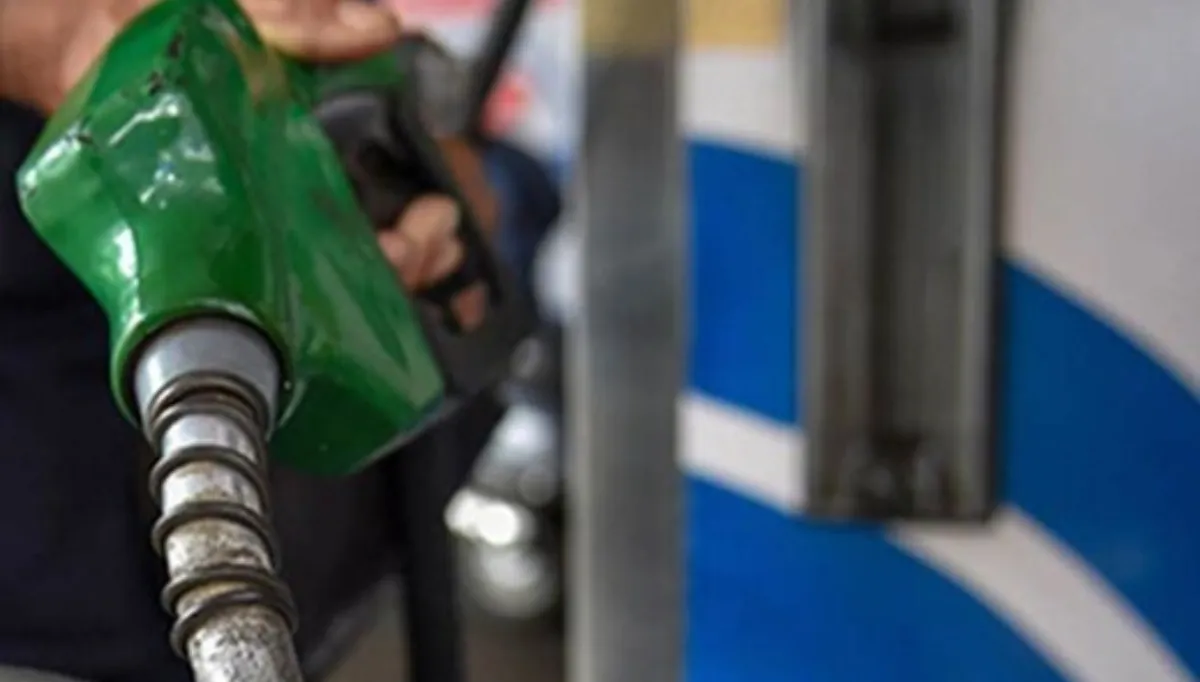
Amid the ongoing war in West Asia, oil marketing companies on Friday hiked the premium petrol prices by up to Rs 2.35 per litre with immediate effect. The prices of Bharat Petroleum Corporation Limited's (BPCL) 'Speed', Hindustan Petroleum Corporation Limited's (HPCL) 'Power', and Indian Oil Corporation Limited's (IOCL) 'XP95' petrol have been increased by Rs 2.09 to Rs 2.35 per litre. However, there is no change in the price of regular petrol at present.
Meanwhile, Sujata Sharma, Joint Secretary at the Ministry of Petroleum and Natural Gas (MoP&NG), said that petrol and diesel prices are deregulated. However, regular petrol and diesel prices have not been increased, and only the price of premium petrol has been raised by over two rupees.
She also said that there has been a significant reduction in panic booking of LPG, and around 7,500 consumers have shifted from LPG to PNG.
"Around 7500 consumers have shifted from LPG to PNG. The situation is still worrying due to the war, but no dry out has been reported at our distributors. Delivery is being done through an authentication code. There is a significant reduction in panic booking, and yesterday we received about 55 lakh refill booking requests. Delivery of LPG cylinders is normal. About 18 states and union territories have issued allocation orders for commercial LPG, and in the last week, about 11300 tons of commercial LPG have been given to consumers, and all the supplies are available in all the states," Sharma said.
Industrial diesel has become expensive
Industrial diesel has also become expensive, with the price increased by Rs 22.02 per litre.
Largest supply disruption
The price hike comes amid escalating war in the Middle East. The war has triggered the largest supply disruption in the history of the global oil market, with shipping through the Strait of Hormuz, which normally carries around 20 per cent of global oil consumption, reduced to a trickle.
Around 20 million barrels per day of crude oil and oil products typically transit the Strait. The loss of these flows has tightened markets significantly, pushing crude oil prices well above USD 100 per barrel and driving even sharper increases in refined products such as diesel, jet fuel and liquefied petroleum gas (LPG).
IEA suggests carpooling
Meanwhile, the International Energy Agency (IEA) has suggested reducing highway speed limits by at least 10 km/h, switching to electric cooking, avoiding air travel where alternatives are possible and increasing car sharing to ease the economic impacts on consumers from oil market disruptions stemming from the Middle East war.
