
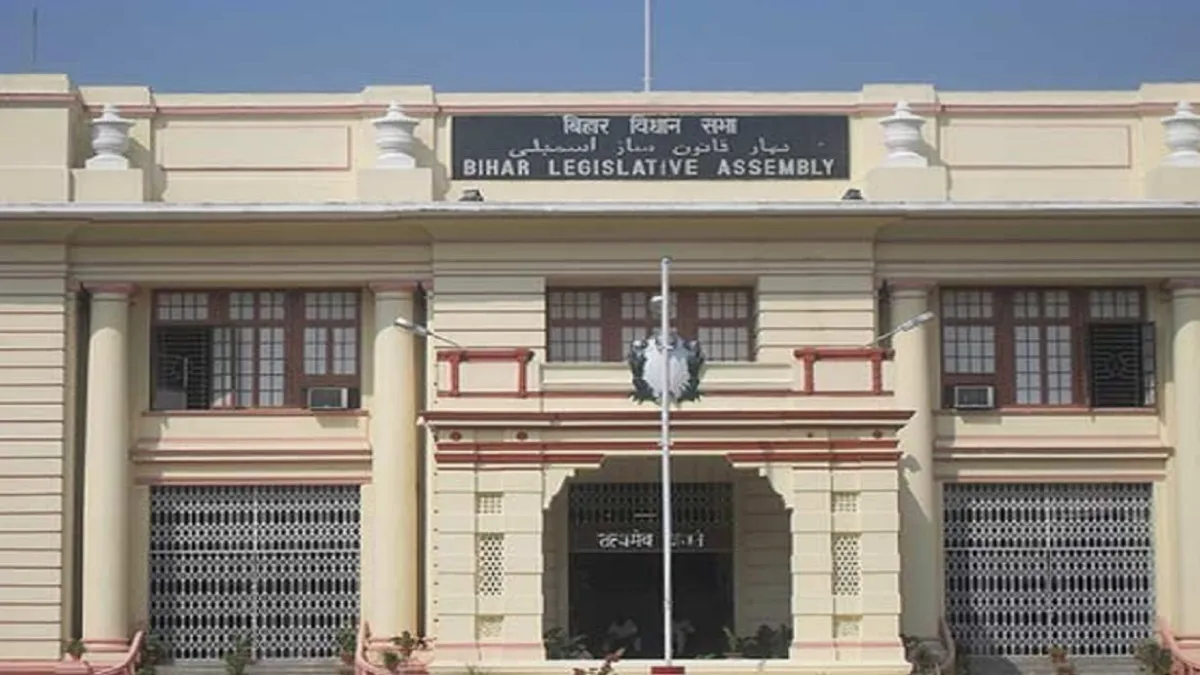
As the countdown for the Bihar elections 2025 begins, it is important to revisit the state's political history to understand the dynamics that have shaped the state's leadership. One of the most interesting periods in the political history of the state was the Fourth Bihar Legislative Assembly (1967-1969), which saw the maximum number of chief ministers in such a short period. In just about two years, Bihar saw four different chief ministers under the same Assembly.
The leadership changes began with Mahamaya Prasad Sinha, who held office for 329 days. He was succeeded by Satish Prasad Singh, whose tenure lasted a mere five days. Following Singh, Bindeshwari Prasad Mandal assumed office and served for 50 days. The fourth and the last chief minister during this Assembly was Bhola Paswan Shastri, who completed a 99-day term.
Who were the four CMs and their tenure
- Mahamaya Prasad Sinha: March 5, 1967, to January 28, 1968 (329 days)
- Satish Prasad Singh: January 28, 1968 to February 1, 1968 (5 days)
- Bindeshwari Prasad Mandal: February 1, 1968, to March 22, 1968 (50 days)
- Bhola Paswan Shastri: March 22, 1968, to June 29, 1968 (99 days)
What happened in the 1967 Bihar Assembly election?
The Congress emerged as the single largest party in the 1967 Bihar Assembly election, but it failed to secure a clear majority to form the government. This paved the way for a coalition of non-Congress parties to come together for the first time.
| Parties | Seats won |
| Indian National Congress (INC) | 128 |
| Samyukta Socialist Party (SSP) | 68 |
| Bharatiya Jana Sangh (BJS) | 26 |
| Communist Party of India (CPI) | 24 |
| Praja Socialist Party (PSP) | 18 |
| Jan Kranti Dal (JKD) | 13 |
| Communist Party of India-Marxist (CPI-M) | 4 |
| Swatantra Party (SWA) | 3 |
| Republican Party of India (RPI) | 1 |
| Independents | 33 |
Parties such as the Samyukt Socialist Party (SSP), Bharatiya Jana Sangh (BJS), Communist Party of India (CPI), Jan Kranti Dal (JKD), and the Praja Socialist Party (PSP) joined hands to form the government. While Karpoori Thakur, leader of the Samyukt Socialist Party and a prominent socialist figure, was considered a strong contender for the Chief Minister's post, other allies were not in agreement. Eventually, a consensus was reached on Mahamaya Prasad Sinha of the Jan Kranti Dal (led by Kamakhya Narain Singh), who became the Chief Minister of Bihar in March 1967, with Karpoori Thakur serving as Deputy Chief Minister.
However, the coalition proved fragile and collapsed within a year. Differences over the caste composition of the Cabinet triggered internal dissent. Health Minister Bindeshwari Prasad Mandal, a backward-class leader, was reportedly forced to resign by socialist stalwart Ram Manohar Lohia. This move provoked Mandal and several SSP members to break away and align with the Congress, resulting in a new government led by BP Mandal, who became Bihar's first backward-class Chief Minister. His tenure, however, lasted a mere 50 days.
Soon after, divisions erupted within the Congress itself over its support for the Mandal government. 17 rebel MLAs, led by former Chief Minister Binodanand Jha, broke away to form the Loktantrik Congress and withdrew support. This forced the Mandal government to resign. In the ensuing political realignment, Bhola Paswan Shastri, an MLA from the Loktantrik Congress camp, emerged as a compromise candidate and became Bihar's first Dalit Chief Minister, supported by opposition legislators. His ministry too survived for only four months.
The weakening of the previously dominant Congress party, rising aspirations of backward classes (forward-backward tussle) and individual greed of leaders were the main reasons for these short-lived governments.
Bihar Assembly Elections 2025
The Election Commission has announced that Bihar's 243 Assembly seats will go to polls in two phases, on November 6 and November 11, with counting set for November 14. The state's political landscape remains fluid, as shifting alliances and internal frictions continue to shape both major coalitions.
Currently, the NDA holds 131 seats, comprising BJP (80), JDU (45), Hindustan Awam Morcha (4), and two Independents. The opposition Mahagathbandhan controls 111 seats – RJD (77), Congress (19), CPI-ML (11), CPI-M (2), and CPI (2). In the 2020 Assembly elections, the RJD emerged as the single largest party with 75 seats, followed closely by the BJP with 74 – both maintaining strong voter bases.
Also Read: Bihar election LIVE: NDA to hold key meeting in Patna; Congress CEC to finalise candidate list today
Also Read: Bihar Elections: Jan Suraaj to release candidates list on this date, will contest all seats | Video
