Centre mandates rigorous 'cough syrup' testing after child deaths from toxic batch
Cough syrup deaths: Amid growing public anger, the Madhya Pradesh government has taken disciplinary action, suspending two Drug Inspectors and a Deputy Director while transferring the State Drug Controller over charges of negligence.
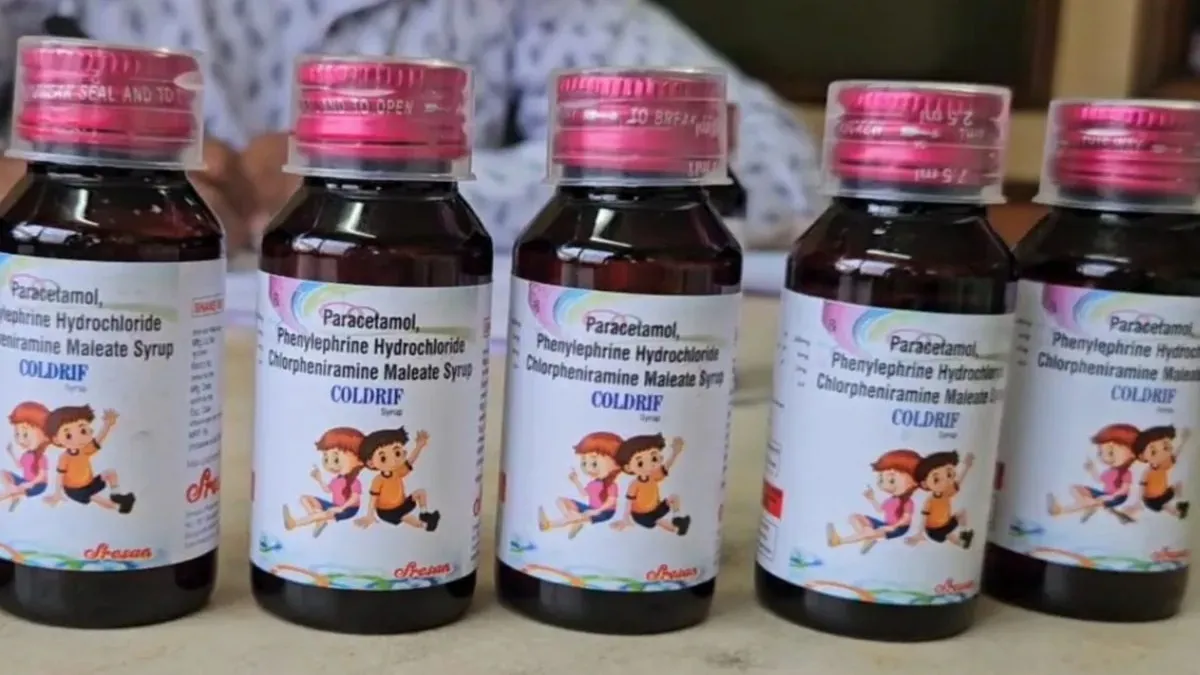
Following the deaths of around 20 children linked to contaminated Coldrif cough syrup, the Directorate General of Health Services has issued a stringent advisory to all states and Union Territories, directing them to enforce stricter testing protocols for pharmaceutical products. The regulator emphasised the urgent need for thorough batch testing of both raw materials and finished products, adherence to safety norms under the Drugs Rules, and sourcing ingredients exclusively from approved vendors.
DEG contamination found 500 times above permissible limit
Investigations revealed that the Coldrif syrup consumed by the affected children in Chhindwara district contained dangerously high concentrations of diethylene glycol (DEG), exceeding permissible limits nearly 500 times. The toxin, known for causing kidney failure, has left at least six other children critically ill. Reports indicate that several batches of the syrup were sold despite not being approved for administration to children below four years of age.
Accountability and government action
In the wake of mounting outrage, the Madhya Pradesh government suspended two Drug Inspectors, a Deputy Director, and transferred the state Drug Controller following charges of negligence. A Special Investigation Team (SIT) has been formed, and a case has been registered against the Tamil Nadu-based manufacturer of the cough syrup. Additionally, Chhindwara paediatrician Dr Praveen Soni has been arrested, and his family clinic sealed. The Indian Medical Association, however, defended him, stating the root cause lies in lapses by the pharmaceutical company and systemic weaknesses in drug oversight.
Compliance with drug quality protocols
Referencing Rules 74(c) and 78(c)(ii) of the Drugs Rules, the Directorate reminded state drug controllers of their responsibility to monitor every batch of medicine during inspection and ensure that manufacturers maintain detailed testing records. “It must be ensured that no batch enters the market without pre-release testing,” the communication stated, calling for ongoing inspections and vendor verification to guarantee material integrity.
Wider crackdown across states
The Union Health Ministry has initiated risk-based inspections of drug manufacturing units across six states to identify and address quality failures. Rajasthan launched door-to-door surveys and public awareness drives about safe medicine use, introduced warning labels for syrups harmful to children and pregnant women, and imposed restrictions on unsafe formulations. Uttar Pradesh authorities seized contaminated Coldrif batches from the Tamil Nadu company, while Maharashtra’s FDA banned the sale and distribution of Batch No. SR-13 after confirming toxic contamination.
Political and public reactions
The deaths have triggered widespread public anger and political outcry. Opposition leaders demanded accountability, with Congress leader Sachin Pilot calling for a judicial inquiry, arguing that an internal government probe would not suffice. The Congress also criticised Madhya Pradesh Chief Minister Mohan Yadav’s handling of the crisis. As the investigation expands, the health regulator’s directive marks one of the most aggressive enforcement drives in recent years to restore public trust in India’s pharmaceutical safety system.